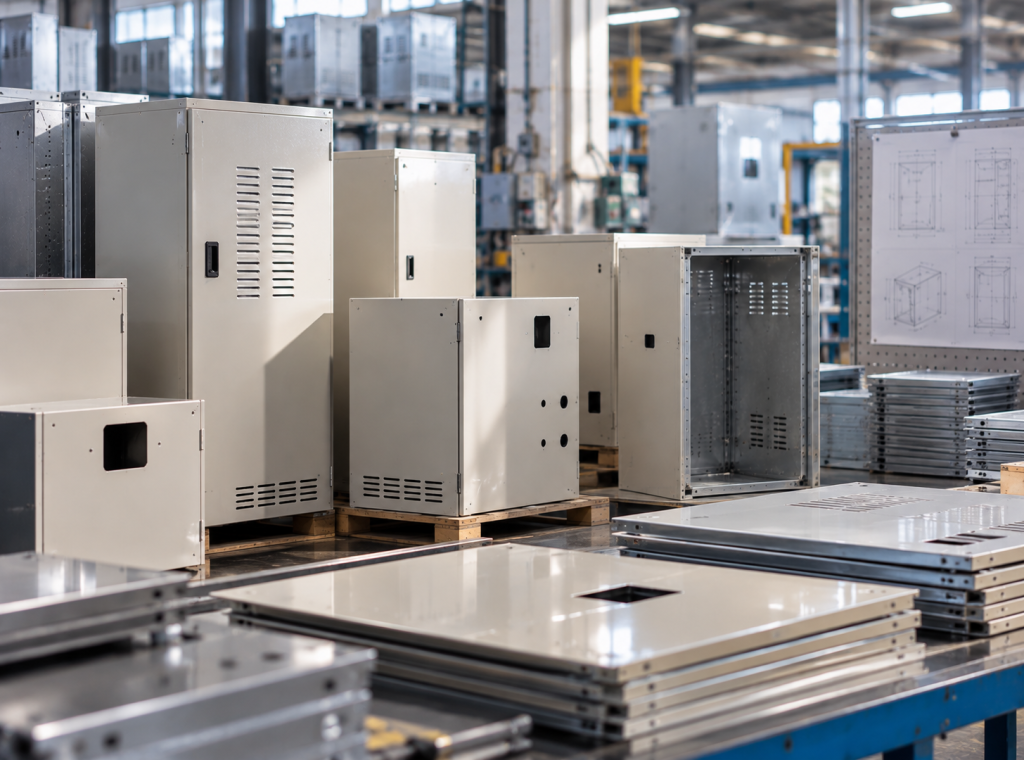
Appliance and enclosure components often combine visible surfaces, tight bends, holes, hems, welded joints, fasteners, and repeated dimensions. Material surface, flatness, formability, thickness tolerance, coating condition, and protection during handling can influence appearance and production consistency.
Cold-rolled steel can support painted and powder-coated components, galvanized steel can add zinc-coated corrosion protection, and prepainted steel can provide a factory-applied finish for suitable visible panels. Final selection should follow the drawing, forming route, finishing process, operating environment, and appearance standard.
Surface appearance, formability, dimensional control, coating compatibility, and protection through downstream production should guide material selection.
Specifications should follow the component drawing, appearance standard, forming severity, joining method, finish, operating environment, and production equipment.
CR / GI / PPGI / PPGL
According to Forming Requirements
According to Component Drawing
According to Cutting Layout
Protective Film / Interleaving, as applicable
According to Corrosion & Appearance Needs
Material form, surface requirements, dimensions, processing, protection, and packing can be coordinated around the component and production line.
Visible panels, internal brackets, doors, shelves, housings, and structural parts can be reviewed according to appearance, forming, and corrosion needs.
Surface reference, color, gloss, texture, paint system, protective film, and inspection criteria can be agreed before production.
Slit width, sheet size, tolerance, edge condition, coil ID, and coil weight can be reviewed against stamping, bending, and cutting equipment.
Film protection, interleaving, edge guards, pallets, stacking direction, bundle weight, and unloading conditions can be specified for suitable products.
Cold-rolled steel is commonly considered when a controlled surface is required for painting or powder coating. Grade, surface finish, cleanliness, flatness, formability, thickness, and pretreatment compatibility should follow the component process.
Galvanized steel can support cabinets, internal structures, equipment housings, and formed parts requiring zinc-coated corrosion protection. Coating condition, weld areas, cut edges, finishing, and service environment should be considered.
Prepainted steel can provide a factory-applied finish for suitable parts. The component design must be compatible with the coating, forming radius, joining method, cut edges, color tolerance, protective film, and downstream assembly.
Slit widths and coil dimensions can be coordinated within confirmed capability. Width tolerance, edge condition, coil ID, coil weight, surface protection, and equipment limits should be provided before quotation.
Identify the visible side, acceptable defect standard, surface finish, color reference, gloss, texture, protective film, inspection method, and any sample approval requirement before production.
Please provide the component drawing, material, grade, thickness, surface, coating or paint, color, width or sheet size, tolerance, forming and joining process, protective film, quantity, destination, and packing requirements.
Arabic
English
French
Portuguese
Spanish